Announcement

Collapse
No announcement yet.

Afghan government is sleeping with the enemy

Collapse
X
 
  • Filter
  • Time
  • Show
Clear All
new posts

  • Afghan government is sleeping with the enemy


    Afghan government is sleeping with the enemy

    The inking of an intelligence cooperation accord between Afghanistan and Pakistan has raised growing voices of concern at all levels in Afghanistan.
    Afghanistan's National Directorate of Security (NDS) and Pakistan's Inter-Services Intelligence (ISI) have signed a memorandum of understanding which - according to the Afghan Presidential Palace - is aimed "mostly [at] jointly fighting terrorism".
    Expressing his deep concerns about the signing of the agreement, former Afghan President Hamid Karzai in a statement called on the government to "immediately cancel" the MoU. It is said that the current and former presidents had a "very tense" telephone conversation on this issue on Wednesday.

    Inside Story - Have Afghan forces been infiltrated?
    The Afghan National Unity Government's naive overture towards Islamabad seems to be gradually subduing Afghanistan to Pakistan. Under the name of bilateral intelligence cooperations, the signed MoU will allow Pakistan's ISI to penetrate deep into a key Afghan security establishment and undermine the country's sovereignty. It is against Afghanistan's national interests.
    My enemy's enemy?
    Rejected by Kabul, Afghan and Pakistani media reports suggest that in accordance with the agreement, the ISI will "equip the NDS and train its personnel".
    Afghan media reports reveal that based on the agreement, the two spy agencies will "jointly fight separatism" and "enemy espionage agencies". The agreement will also allow Pakistan intelligence agencies to probe the terrorist suspects under Afghan detention. It is also said that the MoU has articles on "moulding public opinion and narrative" about Pakistan in Afghanistan.
    The signed accord is now raising questions such as; which "enemy" intelligence agency is the Afghan NDS supposed to jointly counter with Pakistan's ISI? Who is our joint enemy? Who are the terrorists? What is the mutually agreed definition of terrorism and terrorists in the signed agreement? And which separatism and separatist groups do the two spy agencies have to fight?
    For over a decade, Afghan security forces are fighting an imposed war with Pakistan's deep-state's 'strategic assets' such as the Taliban and the Haqqani Network.

    Afghanistan and Pakistan do not have a mutual "enemy intelligence agency" to fight together. Since the fall of the Taliban regime, the Afghan intelligence establishment has been countering ISI's covert activities in Afghanistan.
    For over a decade, Afghan security forces are fighting an imposed war with Pakistan's deep-state's "strategic assets" such as the Taliban, the Haqqani Network and Lashkar-e-Taiba. All the terrorist groups committing violence in Afghanistan on a daily basis by killing innocent Afghans are believed to have their safe-havens in Pakistan and enjoy unbridled support of the host country's army and intelligence agencies.
    Speaking to the upper house of the Afghan parliament recently, the Afghan national security advisor said terrorist hideouts located in Pakistan still pose a "serious threat" to Afghanistan's peace and stability and "our main demand" from Pakistan is to eliminate them.
    If Pakistan's interpretation of the term "enemy intelligence agencies" is India, it must accept that India is Afghanistan's friend and ally.
    Pakistan's self-destructive policies
    There is no doubt that Pakistan also suffers from a dramatic rise in terrorism. Innocent Pakistanis are getting killed in terrorist attacks in different parts of the country every day.
    Pakistan's leadership must come to the realisation that the spread of terrorism on its soil is the direct consequence of the state's self-destructive policies of using terrorism and radicalism as tools. Islamabad must step away from its narrative of denial. Pakistan's reliance on radical terrorist groups is fuelling terrorism both in Afghanistan and Pakistan.
    The element of "joint fight against separatism and separatist groups" in the signed MoU is the most worrying part of the agreement. Afghanistan is a united country and there is no Afghan separatist group in and outside the country. In contrast, since its creation, Pakistan has separatist movements on its soil and they are practically at war against Pakistan.
    Separatist movements of Pakistan have nothing to do with Afghanistan, nor is their existence in Baluchistan, Sindh, Waziristan and other parts a new phenomena in Pakistan. Under the banner of jointly fighting "separatism and separatist movements", Pakistan's intelligence agency has a hidden strategy, which could be very hazardous for Afghanistan.
    What is to be done?
    The Afghan government's policy of appeasement towards Islamabad is a one-sided concession to Pakistan's military establishment. The Afghan government has also agreed to the training of Afghan police by Pakistan. It is allowing Pakistan to worm its way into Afghan security and defense establishments.
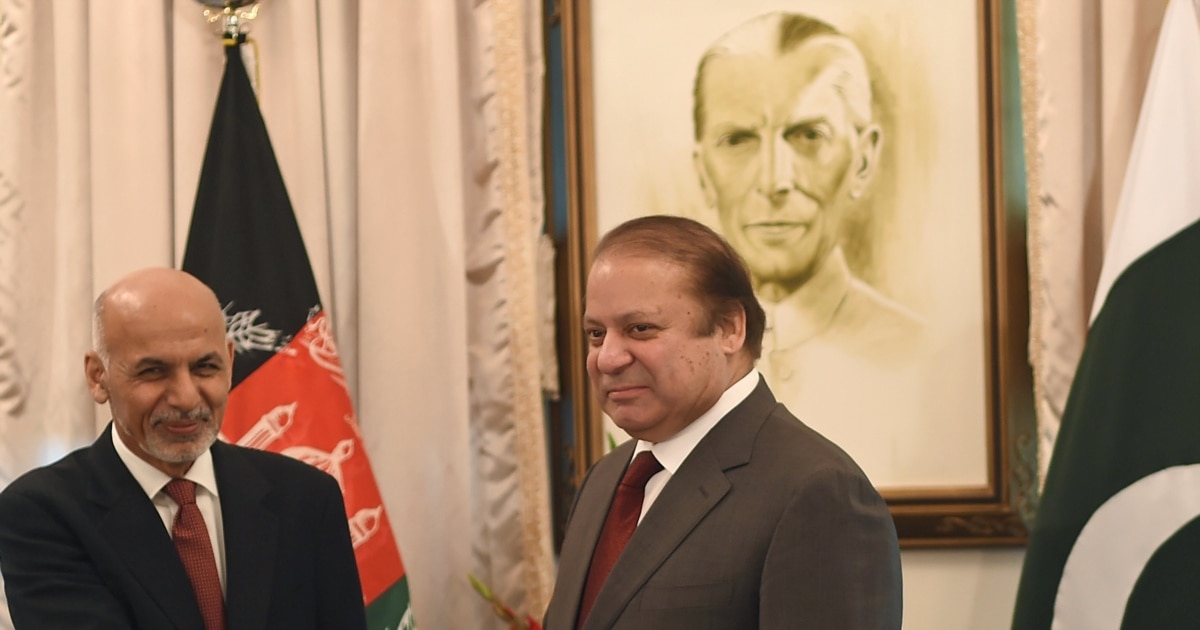
    During his visit to Kabul, Prime Minister Nawaz Sharif announced that "capacity building of Afghan police will be done as already offered, including training". He also acknowledged that Pakistan will "further deepen" its "defense and security partnership" with Afghanistan.
    Afghans see no visible change in Pakistan's double-sided policy towards Afghanistan nor in its dealing with terrorist groups. Condemning the signing of the agreement with Pakistan, Afghan MPs have already summoned senior security officials to a general session of the lower house of the Parliament.
    The head of the Afghan National Directorate of Security, Rahmatullah Nabil, has already expressed his disagreement to the ARG (Afghan Presidential Palace) and resisted the signing of the accord.
    It is imperative for the Afghan government to immediately cancel the MoU with Pakistan before the issue leads to a national outcry.
    Aimal Faizi is an Afghan journalist and former spokesperson for former Afghan president, Hamid Karzai from 2011-2014.
    The views expressed in this article are the author's own and do not necessarily reflect Al Jazeera's editorial policy.
  • #2
    You used to like Ghani Toramana. What happened?

    If its not of the people, by the people, for the people, then forget it. Why would Ghani work for the people when he is not of the people or by the people. He was a fraud from the get go.

    Comment


    • #3
      Originally posted by Toramana View Post
      http://www.aljazeera.com/indepth/opi...044826456.html

      Afghan government is sleeping with the enemy

      The inking of an intelligence cooperation accord between Afghanistan and Pakistan has raised growing voices of concern at all levels in Afghanistan.
      Afghanistan's National Directorate of Security (NDS) and Pakistan's Inter-Services Intelligence (ISI) have signed a memorandum of understanding which - according to the Afghan Presidential Palace - is aimed "mostly [at] jointly fighting terrorism".
      Expressing his deep concerns about the signing of the agreement, former Afghan President Hamid Karzai in a statement called on the government to "immediately cancel" the MoU. It is said that the current and former presidents had a "very tense" telephone conversation on this issue on Wednesday.

      Inside Story - Have Afghan forces been infiltrated?
      The Afghan National Unity Government's naive overture towards Islamabad seems to be gradually subduing Afghanistan to Pakistan. Under the name of bilateral intelligence cooperations, the signed MoU will allow Pakistan's ISI to penetrate deep into a key Afghan security establishment and undermine the country's sovereignty. It is against Afghanistan's national interests.
      My enemy's enemy?
      Rejected by Kabul, Afghan and Pakistani media reports suggest that in accordance with the agreement, the ISI will "equip the NDS and train its personnel".
      Afghan media reports reveal that based on the agreement, the two spy agencies will "jointly fight separatism" and "enemy espionage agencies". The agreement will also allow Pakistan intelligence agencies to probe the terrorist suspects under Afghan detention. It is also said that the MoU has articles on "moulding public opinion and narrative" about Pakistan in Afghanistan.
      The signed accord is now raising questions such as; which "enemy" intelligence agency is the Afghan NDS supposed to jointly counter with Pakistan's ISI? Who is our joint enemy? Who are the terrorists? What is the mutually agreed definition of terrorism and terrorists in the signed agreement? And which separatism and separatist groups do the two spy agencies have to fight?
      For over a decade, Afghan security forces are fighting an imposed war with Pakistan's deep-state's 'strategic assets' such as the Taliban and the Haqqani Network.

      Afghanistan and Pakistan do not have a mutual "enemy intelligence agency" to fight together. Since the fall of the Taliban regime, the Afghan intelligence establishment has been countering ISI's covert activities in Afghanistan.
      For over a decade, Afghan security forces are fighting an imposed war with Pakistan's deep-state's "strategic assets" such as the Taliban, the Haqqani Network and Lashkar-e-Taiba. All the terrorist groups committing violence in Afghanistan on a daily basis by killing innocent Afghans are believed to have their safe-havens in Pakistan and enjoy unbridled support of the host country's army and intelligence agencies.
      Speaking to the upper house of the Afghan parliament recently, the Afghan national security advisor said terrorist hideouts located in Pakistan still pose a "serious threat" to Afghanistan's peace and stability and "our main demand" from Pakistan is to eliminate them.
      If Pakistan's interpretation of the term "enemy intelligence agencies" is India, it must accept that India is Afghanistan's friend and ally.
      Pakistan's self-destructive policies
      There is no doubt that Pakistan also suffers from a dramatic rise in terrorism. Innocent Pakistanis are getting killed in terrorist attacks in different parts of the country every day.
      Pakistan's leadership must come to the realisation that the spread of terrorism on its soil is the direct consequence of the state's self-destructive policies of using terrorism and radicalism as tools. Islamabad must step away from its narrative of denial. Pakistan's reliance on radical terrorist groups is fuelling terrorism both in Afghanistan and Pakistan.
      The element of "joint fight against separatism and separatist groups" in the signed MoU is the most worrying part of the agreement. Afghanistan is a united country and there is no Afghan separatist group in and outside the country. In contrast, since its creation, Pakistan has separatist movements on its soil and they are practically at war against Pakistan.
      Separatist movements of Pakistan have nothing to do with Afghanistan, nor is their existence in Baluchistan, Sindh, Waziristan and other parts a new phenomena in Pakistan. Under the banner of jointly fighting "separatism and separatist movements", Pakistan's intelligence agency has a hidden strategy, which could be very hazardous for Afghanistan.
      What is to be done?
      The Afghan government's policy of appeasement towards Islamabad is a one-sided concession to Pakistan's military establishment. The Afghan government has also agreed to the training of Afghan police by Pakistan. It is allowing Pakistan to worm its way into Afghan security and defense establishments.
      During his visit to Kabul, Prime Minister Nawaz Sharif announced that "capacity building of Afghan police will be done as already offered, including training". He also acknowledged that Pakistan will "further deepen" its "defense and security partnership" with Afghanistan.
      Afghans see no visible change in Pakistan's double-sided policy towards Afghanistan nor in its dealing with terrorist groups. Condemning the signing of the agreement with Pakistan, Afghan MPs have already summoned senior security officials to a general session of the lower house of the Parliament.
      The head of the Afghan National Directorate of Security, Rahmatullah Nabil, has already expressed his disagreement to the ARG (Afghan Presidential Palace) and resisted the signing of the accord.
      It is imperative for the Afghan government to immediately cancel the MoU with Pakistan before the issue leads to a national outcry.
      Aimal Faizi is an Afghan journalist and former spokesperson for former Afghan president, Hamid Karzai from 2011-2014.
      The views expressed in this article are the author's own and do not necessarily reflect Al Jazeera's editorial policy.
      I thought that Al jazeera was "The Muslim Brotherhood's News" according to this loony tune here:

      Conversing the truth, lies and intelligence pertaining to the assessment of the Pashtun population across the Durrand line.


      Its rather hilarious that on the one hand you and your idiotic comrades justify the very existence of the Kabul Puppet government with shrill cries of "It was voted in by the People" to quell the insurgency, but then you are so very supportive of subversion of that same exact government that was supposedly elected by and for the people.

      Who is Karzai to dictate anything to anyone now that he is no longer in an elected position?

      If Bush II and Clinton and so on and so forth stay out of eachother's way and do not hold "tense" phone calls making demands to their predecessor, who is that corrupt piece of trash Hamid Karzai then to claim himself a democratic adherent yet shore up resistance and issue threats to the point where Ghani has now stated to confidantes that he is worried about his government lasting?

      Wasn't it crazy old Alzheimers Drug Brother Hamid who on the one hand asked the jirga to approve the status of forces yet then the next day claimed "we dont need the Americans around, I wont sign?"

      Aimal Faizi can go back to pumping gas in France and utilize his inferiority complex for some purposeful thing.
      Attached Files
      "2 crackheads don't become any better or stronger by sharing the same crack pipe." - Greatest PF quote

      Comment


      • #4
        Originally posted by khushal View Post
        You used to like Ghani Toramana. What happened?

        If its not of the people, by the people, for the people, then forget it. Why would Ghani work for the people when he is not of the people or by the people. He was a fraud from the get go.
        LOL, my friend he's "for and by the people" when he suits their purposes.

        When he doesn't, no matter if video tapes validated or confirmed that every person in Afghanistan provided 100% of the vote to him, then he's suddenly "sleeping with the enemy" or a "despot" or whatever else these minority subversive types want to hurl out.

        If Erdogan, Morsi, or whomever is elected by 90% of the people and then he does something these alcoholics don't like (such as get rid of their booze or their hookers) they start hurling their invective like orangutans and celebrate like its New Years when some general on British or American payrolls puts the boot on the democratically elected person's neck.
        "2 crackheads don't become any better or stronger by sharing the same crack pipe." - Greatest PF quote

        Comment


        • #5
          It is people like these that cause instability. Suppressing the will of the people.

          Comment


          • #6
            No intelligence deal signed with Pakistan: official

            KABUL (Pajhwok): A senior government official on Thursday said Afghanistan had not signed any agreement with Pakistan in area of intelligence, but the draft of such a deal had been prepared.

            Voices of concern were raised after the Afghan spy agency, the National Directorate of Security or NDS, and the Pakistani spy agency, Inter-Services Intelligence or ISI, concluded a memorandum of understanding on intelligence cooperation last week.

            Najibullah Manali, media and culture advisor at the National Security Council (NSC), told Pajhwok Afghan News that President Ashraf Ghani would consult leaders of the parliament and civil society groups over the proposed agreement.

            “In that meeting, the president would ask the first question from participants if they want peace with Pakistan or not,” said Manali, who added if the answer was in negative, the government would not further proceed with the agreement.

            He said if political leaders endorsed the draft agreement, it would be sent to Pakistan and leaders of the premier spy agencies of Afghanistan and Pakistan would sign it into a legal document.

            The official said nothing had been mentioned in the draft about separatists, the Durand Line, Afghanistan’s territorial integrity, Pakistan’s interferences in Afghanistan’s affairs, Afghan-Indo relations, Kabul’s ties with other countries or foreign intelligence agencies.

            Manali said it had been said in the agreement that no separatist could use or benefit from one country’s soil against the other.

            He said the main objective of the accord was to strengthen intelligence cooperation between Afghanistan and Pakistan, criticising politicians for not letting the accord normally complete the legal stages.

            Reports say the spy agencies of the two countries would share intelligence against terrorists on their respective sides of the border under the MoU.

            A spokesman for the NDS had said the basic aim of the MoU was to share information in technical areas and that such agreements had reached between the two agencies in the past.

            A day earlier, former president Hamid Karzai urged his successor Ashraf Ghani to scrap the deal with Pakistan as it was against Afghanistan’s national interest.

            Lawmakers of both houses of parliament also expressed their concerns over the accord, summoning top security officials to explain their position.

            - See more at: http://www.pajhwok.com/en/2015/05/21....zcBw3OpU.dpuf

            Comment


            • #7
              A leading U.S. scholar on Afghanistan sees no visible efforts by Islamabad to reciprocate Kabul's measures to reset their bilateral relationship.


              Academic Barnett Rubin formerly served as as senior adviser to the U.S. special representative for Afghanistan and Pakistan. He sees few Pakistani efforts to reciprocate Afghan President Ashraf Ghani's groundbreaking steps to establish a lasting peaceful and cooperative relationship with Pakistan.

              RFE/RL: Is the window still open for Islamabad to respond to President Ashraf Ghani's attempts to reset relations with Pakistan, initiated last fall?

              Barnett Rubin: President Ghani has shown a lot of patience and apparently will continue to do so for a while, but I doubt he can continue much longer without visible action by Pakistan. If the Pakistan military cannot force the Taliban to negotiate right now, it will have to act against Taliban leaders in Quetta or Karachi. In the past, the ISI [Pakistan's Inter-Services Intelligence agency] has detained Taliban leaders who acted against its notion of Pakistan's interests.

              Why is it not doing so now? And the Pakistan Army, however overstretched it is, needs to do something to limit the bloodshed the Taliban are inflicting on all parts of Afghanistan. The Afghan Army, which is far more overstretched, has undertaken operations against TTP (Tehrik-e Taliban Pakistan, or the Pakistani Taliban) leaders in Kunar. Where is the reciprocity?

              RFE/RL: So we haven't seen the kind of progress or quid pro quo that most had hoped for after Ghani tried to solicit Pakistani help in talking to the Taliban?

              Barnett Rubin
              Barnett Rubin
              Rubin: It appears from what I see in the media that Ghani has addressed all the concerns that Pakistan has expressed about the current dispensation in Afghanistan -- India, cooperation on the border, action against the TTP, economic access, access to and training of Afghan security forces.

              He has offered Pakistan land access to Central Asia for trade on the condition that Pakistan offers Afghanistan the same access to India -- but, again, Pakistan is not ready to reciprocate. I understand why this looks like a one-way deal to many Afghans. Whatever is going on behind the scenes, Afghans don't see results.

              RFE/RL: Can you offer any insight into what is happening with the peace talks between the Taliban and the Afghan government?

              Rubin: I imagine the Afghan government and the Taliban are communicating with each other, but the Taliban are unlikely to negotiate seriously until they receive some kind of guarantee that the U.S. will withdraw its troops, and they want to hear it directly from the U.S. In any such talks, the U.S. would say, I imagine, that it will withdraw its troops in coordination with the Afghan government only when there is a settlement, and the Taliban will reply that they will negotiate only when the troops have left.

              Then you are having a discussion about timing and commitment to a settlement, not about principles. President Ghani, like his predecessor, rightly wants a reconciliation process led by the Afghan government, but unfortunately the Afghan government does not control the main issue motivating the Taliban -- the presence of U.S. troops.

              It is difficult to have an Afghan-led peace process to end a U.S.-led war process. It is up to the U.S. to address this issue and empower the Afghan government. But this does not relieve Pakistan of its responsibility to influence or act against the Taliban.

              RFE/RL: The recent signing of a Memorandum of Understanding (some say agreement on a draft) between Pakistan's ISI and Afghanistan's Notional Directorate of Security (NDS) has turned into a very emotional issue in Afghanistan. How do you assess the controversy?

              Rubin: Ultimately, both countries need cooperation between these intelligence agencies, because terrorists, insurgents, and organized crime do not recognize any borders. Pakistan has the additional problem of having different agencies and legal frameworks in FATA (Federally Administered Tribal Areas), PATA (Provincially Administered Tribal Areas, and the so-called "settled" areas [or districts of the northwestern Khyber Pakhtunkhwa and southwestern Balochistan provinces].

              This is almost as difficult as coordinating with the NDS. But the public in each country has come to view the other's intelligence agency as an enemy, and the Afghan view of the ISI, at least, has a solid basis in fact. The NDS-ISI agreement is a very sudden change and, as far as I know, Ghani has not explained it to the Afghan public. Maybe he wants to wait until he has concrete results to show for it. Otherwise, what can he say? It is up to the Pakistan Army to change this dynamic.

              A leading U.S. scholar on Afghanistan sees no visible efforts by Islamabad to reciprocate Kabul's measures to reset their bilateral relationship.

              Comment


              • #8
                A year ago, when some of the supporters of Abdullah mentioned how Ghani use to serve as a lobbyist for Pakistan in the international arena. They argued that he is too friendly with Pakistan. Back then, I wasn't quite sure what to make of it.
                Originally posted by Firdousi
                Never talk with Afghans about politics. All their political knowledge is limited to conspiracy theories, political demonization and contradictions. No logic, no reason.

                Comment


                • #9
                  Originally posted by Shamlawar Khurasani View Post
                  A year ago, when some of the supporters of Abdullah mentioned how Ghani use to serve as a lobbyist for Pakistan in the international arena. They argued that he is too friendly with Pakistan. Back then, I wasn't quite sure what to make of it.
                  Shamlawar Qarqistani, you are back with your propaganda haan?

                  Comment


                  • #10
                    This is indeed unacceptable. The same nation's government who was blaming Pakistan for insurgent attacks inside Afghanistan is now cooperating with them through a lack lusting treaty.

                    Ghani really messed up here, i hope somehow he changes his minds cancels the MOu plan.
                    "Revenge is a dish best served cold".

                    -Old Pashtun proverb


                    "My Pashtun Pride i will not hide!"

                    Comment


                    • #11
                      The gov't has traded one Indus gov't that can them bring them no good with another. From the perspective of the Afg gov't it would be unwise to invest so much political favor into Pakistan with no results as of yet, but then again the Afg gov't are retards. From an outsiders view its hilarious how Afghanistan is being played by Pakistan, TTP have been attacked in Afg whereas in Pakiland the Afg Taliban still do as they please. Perhaps the next few months will even out this relationship, and I hope so for the sake of peace, but I am not optimistic.
                      There are people today who think that admitting God’s absolute greatness decreases the value and importance of humans in the creation, as if God and mankind are rivals competing in greatness and power. Meanwhile I feel that whenever our perception of God’s greatness increases, with it we become greater, because we are the creation of a great God.

                      Sayyid Qutb

                      Comment


                      • #12
                        Najibullah rightly said afghan are making the same mistake over and over again. perhaps Ghani don't know what happen of the Geneva accord signed in 1988.

                        Comment


                        • #13
                          Over the past weeks, Kabul buzzed with rumours that talks with the Taleban would begin soon, specifically, in the first week of March. That particular week is now past and nothing has happened. But this does not mean that rumours were completely false or that no movement is being made towards new talks with the […]

                          Caution about the Pakistani about-face is reasonable. Pakistan has promised time and again to support peace initiatives in Pakistan, but so far this has all remained rhetoric. The Afghan government has not forgotten how the head of their HPC was humiliated when he finally was allowed to visit former Taleban deputy leader Mullah Baradar, incarcerated by Pakistan in 2010 (see AAN reporting here), but found him unable to communicate at all, either due to illness or, as some assumed, having been drugged to prevent him from speaking (details in this AAN dispatch and here). There were also reports over years that, in addition to Baradar’s case, Pakistan has arrested war-wary Taleban commanders who were pondering reconciliation with Kabul.

                          The question is also whether the Taleban’s eagerness to talk peace will be boosted if they (or some of them) are pushed to the negotiating table against their will by the Pakistanis.

                          It is also far from clear whether the Pakistani military’s operation in North Waziristan has targeted all militants in the area. Independent media in Pakistan have reported that the Pakistani military has allowed those they consider to be “good” Taleban (including Haqqani network militants) to relocate in Pakistan or slip over the border to Afghanistan and only hit those they consider to be “bad” Taleban, namely those factions involved in the wave of attacks in Pakistan. The Pakistani daily Nation reported in August 2014:

                          It is alleged that members of the Haqqani network – the good Taliban – were allowed to evacuate their bases in North Waziristan prior to the operation. According to local tribesmen, the militants are now being resettled . . . in Upper Kurram. . . . This raises serious questions about Pakistan’s counter-terrorism policy. If the idea is to target only those who present an imminent threat to internal security, while accommodating the ‘good militants’ who are only interested in Afghanistan or India, then really, nothing has changed.

                          That approach is confirmed by another Pakistani source that alleges that “seven out of the nine tehsils, or sub-districts [of North Waziristan], have been excluded from the overall operation, which [includes an area, Data Khel, where] Hafiz Gul Bahadur, the prominent militant commander . . . has been harboring the Haqqanis” (more detail here). An Afghan who recently visited the area told AAN that, after the destruction in the larger towns of North Waziristan, a new centre for the Haqqani network has “been constructed” in Karak, near the town of Bannu, where he has seen large numbers of armed Haqqani militants moving freely in the streets.

                          Some foreign militants may possibly have escaped across, or were allowed to cross, the border with Afghanistan. This might explain the increase of alleged Islamic State (“Daesh”) fighters in different Afghan provinces who are often described as “Arabs,” “Chechens,” Central Asians” or “Pakistani” – a description previously reserved for members of al-Qaeda and its affiliates, like the Islamic Movement of Uzbekistan. Also, factions of the so-called Punjabi Taleban in Pakistan have ‘decided,’ incidentally just after Zarb-e Azb had commenced, to stop fighting and focus on dawat and tabligh (proselytising and propaganda) in Pakistan but to continue to operate in Afghanistan.

                          Pakistan, despite its claimed change of attitude, is also seemingly trying to keep ahead of anyone else, take credit for any progress and, above all, control the process. This impression is supported by the flurry of often unattributed and sometimes premature ‘breaking news’ reports in the Pakistani media (usually fed to them by the Pakistani military) about talks and the Taleban’s willingness to join them. Pakistan seemingly is even trying to slip Taleban into talks with the Afghan government who are not authorised by the movement’s leadership. (Even the case of ‘mistaken identity’ belongs in this category, in which a Taleban leader told the Turkish Anadolu news agency in early March of an immediate start of peace talks, which was then vehemently denied by the Taleban.) It is also striking how easily Pakistani officials and media now mention that the Taleban leadership is currently meeting in Pakistan to make up their minds about talks and is also meeting with Pakistani officials (see for example here). This belies decades of denial that Pakistan had anything to do with the Taleban.

                          Comment


                          • #14
                            Originally posted by Toramana View Post
                            Shamlawar Qarqistani, you are back with your propaganda haan?
                            isnt "haan" urdu?
                            faye's chauffeur

                            Pashton's girlfriend

                            I'm a Pashtun Princes


                            Comment

                            Working...
                            X