Announcement

Collapse
No announcement yet.

Operation Zarb-e-Azb l Discussion and updates

Collapse
X
 
  • Filter
  • Time
  • Show
Clear All
new posts

  • Are we expecting Swat sort of loved developed for the army in NW aswell?


    The father of the boy said he hoped that his son would grow up to be brave and courageous like soldiers of the Pakistan Army.
    "[B][SIZE="3"]Seer Speen Wazeer[/SIZE][/B]"

    Comment


    • [MENTION=17351]Friends of Baloch[/MENTION]

      Lala,nambar de pa vilorrr da,de ttp le bya de bla lambar da :D
      "[B][SIZE="3"]Seer Speen Wazeer[/SIZE][/B]"

      Comment


      • kiyani lacked taking decision,He wasnt as agressive as raheel sharif is.

        Raheel sharif Fits the internal threat but he's too aggressive and might lead us to a war with india

        A former spokesman for the Pakistan Army says that as army chief, retired General Ashfaq Parvez Kayani baulked at launching a military operation in North Waziristan in 2010 for fear of a backlash from the religious right.
        The indecision, he says, has caused untold losses.
        This writer spoke to retired Major General Athar Abbas. Here are some excerpts from the interview.
        Q: Why do you think that 2010-11 was the right time to have launched the North Waziristan operation?

        A: As compared to any other area, the army has suffered heavily in North Waziristan because a large-scale military operation was not carried out there. When we conducted the South Waziristan operation in 2009, we isolated the TTP. That operation was successful. At that time the army warned the North Waziristan tribes that if they allowed the TTP Mehsuds to migrate into their area, this would warrant a military operation.
        But they [TTP members] kept concentrating [their forces] and virtually took over Mirali, Machis and other areas. Then they allowed in the Punjabi Taliban, Lashkar-i-Jhangvi and the Ilyas Kashmiri group.
        The tribes somehow made deals with groups such as that of Hafiz Gul Bahadur, with a ‘live and let live’ understanding. But the equation changed and the tribes were in no position to dictate their terms when the militants violated some conditions.
        The militants had a more powerful hold on the area as compared to the virtually unarmed tribesmen. The militants also were violating clauses of their deals with the government and the army. They were attacking the military. In one ambush in 2010, the Hafiz Gul Bahadur group, which was supposed to be in an agreement with us, killed 40 of our soldiers, including a commanding officer.
        Q: What was the military top brass’s opinion about launching an operation in 2010-11?

        A: The final decision, of course, was always that of the chief, but formation commanders recommended that unless we launched an offensive in the area and cleared it, we wouldn’t be able to control the spread of militancy and terrorism. As their hub was North Waziristan, everyone in the area was of the opinion that eventually, we would have to go for it.
        Many of us were of the same opinion: the more we delayed, the more complex things would become. But another group believed that the militant groups or tribes on our side would turn against us and join the militant groups [in case the operation was launched].
        But the fact is that the tribes were violating the clauses, the militant groups were violating agreements and whatever members of the Haqqani network were there in the area, were very few. The Haqqanis were mostly operating from Paktia and Khost [in Afghanistan]. The other concern was how to expel them [militants], how to displace them. The other factor on his [Mr Kayani’s] mind was, what will become of the IDPs?
        But the fact was that a few of us were of the opinion that nothing was going to change as far as our administration, government and other agencies were concerned. Those would remain the same, but it [a delay] would complicate matters more because there would be more consolidation of the militants in the area.
        I can say with confidence that we are vindicated. It has now become a much bigger problem.
        Q: Do you think that Mr Kayani was afraid of a personal attack against him?

        A: I don’t think so, but certainly there was the vulnerability of towns and cities because there was weakness in our law enforcement, the civilian law-enforcement agencies. They were so much in disarray. So this was also the concern. But now, too, the vulnerability is the same; the retaliation may occur.
        There was also no political consensus and therefore he thought a military operation would not find political support. And there would be a strong reaction by the religious right. He also apprehended that they would directly attack him.
        That became his main concern.
        Q: Can we say that he was concerned about religious hardliners’ backlash towards him?

        A: He was concerned about the reaction of the religious right. But the fact was that the ruling party, the Awami National Party and the MQM were all for an all-out operation. They were all along for the operation, barring the right-of-centre parties and, of course, the religious right. I don’t know how concerned he was about his personal security or safety.
        Q: What made the current military leadership go for this operation?

        A: For six years, he [Mr Kayani] kept vacillating over the issue and in six months, this leader decided that this is the crux of the problem. He took a decision. It’s a matter of how decisive you are, how much you have the ability to sift essentials from non-essentials.
        Q: How much do you think the country has suffered for not launching the operation in 2010-11?

        A: We have suffered more than 50,000 civilian causalities owing to this. Not everything happened because of North Waziristan, but it was the main source. Over 5,000 soldiers were killed and 10,000 more lost limbs.
        There are the economic losses and the huge loss to Pakistan’s international image.


        Q: Was the Haqqani network also a factor of delay?

        A: It was one of the overriding factors. And as I said whatever the elements of the Haqqanis were there, intelligence [agencies] was supposed to manage them. You can’t allow these groups to keep creating problems.
        Q: Why has your revelation about Mr Kayani’s indecision come now?

        A: I was to give an interview to the BBC on the military operation. The issue came up. They asked why now, why not earlier? When we got into that, things started coming up and I had to face the truth squarely.
        Q: Do you think that there should be action against the former army chief for this costly indecision?

        A: That is not a fair question to ask. I think history will judge.
        "[B][SIZE="3"]Seer Speen Wazeer[/SIZE][/B]"

        Comment


        • "[B][SIZE="3"]Seer Speen Wazeer[/SIZE][/B]"

          Comment


          • [URL="http://historyofpashtuns.blogspot.com.au/2014/07/afghan-sikh-wars.html"][SIZE=5][COLOR=Green]History of Pashtuns[/COLOR][/SIZE][/URL]

            Comment


            • Originally posted by Smarty View Post

              To Paradise, with Pakhto, I will go.

              Comment


              • talibs want porn tapes back

                "[B][SIZE="3"]Seer Speen Wazeer[/SIZE][/B]"

                Comment


                • Complete FATA border with Afghanistan to be fenced under the post operation strategy

                  Source:Ex AVM Rashid Chaudhary
                  "[B][SIZE="3"]Seer Speen Wazeer[/SIZE][/B]"

                  Comment


                  • Taliban cut hair and beards to flee army assault

                    By AFP
                    Updated about 4 hours ago


                    In this photograph taken on June 18, 2014 shopkeepers pack up their shop as they prepare to flee from a military operation in North Waziristan tribal agency, in Miramshah. AFP Photo


                    BANNU. Hundreds of Taliban fighters rushed to disguise themselves with new haircuts in the weeks before the launch of the North Waziristan operation, it has emerged, as refugees revealed details of life under the militants - and their taste for imported luxuries.
                    Azam Khan was one of the top barbers in Miramshah until he, like nearly half a million others, fled the long-awaited offensive unleashed by the military on the tribal area in June.
                    He told AFP his business boomed in the month leading up to the army assault as the militants sought to shed their distinctive long-haired, bearded look.
                    “I have trimmed the hair and beards of more than 700 local and Uzbek militants ahead of the security forces' operation,” he said while cutting hair in a shop in Bannu, the town where most civilians fled.
                    For years he cut Taliban commanders' hair to match the flowing locks of former Tehreek-i-Taliban Pakistan (TTP) leader Hakimullah Mehsud, killed by a US drone last November, but in May a change in style was called for.
                    “The same leaders came asking for trimming their beards and hair very short, saying that they were going to the Gulf and wanted to avoid problems at Pakistani airports,” Khan said.
                    Even Uzbeks and Tajiks with little knowledge of the local language came to him, he said.
                    “Knowing little Pashto, they used to utter four words: 'mulgari (friend), machine, zero, Islamabad',” said Khan -- asking him to shave their beards to nothing so they could go to Islamabad.
                    French perfume

                    The military launched the offensive against militants in North Waziristan tribal area on June 15, vowing to wipe out the strongholds they have used to wreak countless deadly terror attacks across the country.
                    The rugged, mountainous area on the Afghan border has been a hideout for years for Islamist militants of all stripes - including Al Qaeda and the homegrown TTP as well as foreign fighters including Uzbeks and Uighurs.
                    For years people from North Waziristan remained tight-lipped about life in a Taliban fiefdom, scared of being kidnapped or even beheaded if they shared information about the militants.
                    But as the exodus of people has grown, some have found the confidence to tell their stories.
                    While the militants bombed and maimed thousands in their fight to install an austere sharia regime in Pakistan and publicly professed contempt for the West, in North Waziristan they indulged themselves with fancy imported goods.
                    Hikmatullah Khan, a shopkeeper in Miramshah, said that at the same time as commanders were insisting he pay 300 rupees a month “tax”, their fighters were stocking up on grooming products.
                    “They were very keen to buy foreign-branded shampoos, soaps and perfumed sprays,” Khan told AFP.
                    “They had a lot of eagerness for French and Turkish perfumes, body sprays and soaps. “Muhammad Zarif, a wholesale merchant in Datta Khel, near Miramshah, said fighters would buy large quantities of British detergent and American cooking oil, much of it smuggled from Dubai.
                    Militants gone?

                    Pakistan's allies, particularly the United States, have long called for an operation to flush out groups like the Haqqani network, which use the area to target Nato troops in neighbouring Afghanistan and are thought to have links to Pakistani intelligence services.
                    The military has said it will target militants “of all hue and colour” but the scant resistance troops have encountered has led many to believe the insurgents fled before the offensive, limiting its effectiveness.
                    The army says the operation has killed nearly 400 militants and will rid North Waziristan of their bases, denying them the space to plan attacks and allowing investment to come to one of the country's poorest areas.
                    But it remains to be seen what the long-term impact of the offensive will be. Local intelligence and militant sources told AFP that up to 80 per cent of fighters fled after rumours of an army assault emerged in early May, most over the porous border into Afghanistan.
                    These sources estimate the present number of militants as around 2,000, down from around 10,000 before the operation. The figures are uncertain and difficult to confirm.
                    The army has asked Afghanistan to crack down on TTP refuges across the border and this week top brass from both sides met in Islamabad to discuss the issue.
                    “It is clear that militants were aware that the offensive was coming before it started. Lots of them fled,” a Western diplomat told AFP.
                    “The big question is: after the offensive, will Pakistan allow the Haqqanis and others to come back? “


                    faye's chauffeur

                    Pashton's girlfriend

                    I'm a Pashtun Princes


                    Comment


                    • As expected

                      I hope they are caught
                      "[B][SIZE="3"]Seer Speen Wazeer[/SIZE][/B]"

                      Comment


                      • i hope you and yours get their throats slit

                        Comment


                        • talibs are running away like cowards followed by haircuts

                          dirty chaps can't even fight but are ready to bomb innocents
                          "[B][SIZE="3"]Seer Speen Wazeer[/SIZE][/B]"

                          Comment


                          • Noora phtosession vs True Leader Imran khan.

                            He can feel the pain of IDP's while Noora visited for photo session only


                            "[B][SIZE="3"]Seer Speen Wazeer[/SIZE][/B]"

                            Comment


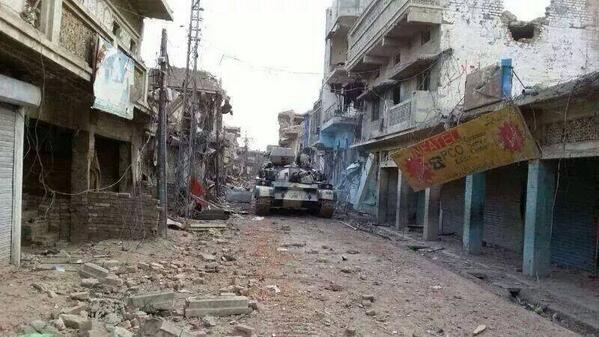
                            • paki army tank in miranshah bazaar
                              [URL="http://historyofpashtuns.blogspot.com.au/2014/07/afghan-sikh-wars.html"][SIZE=5][COLOR=Green]History of Pashtuns[/COLOR][/SIZE][/URL]

                              Comment


                              • Fresh pic of miranshah
                                [URL="http://historyofpashtuns.blogspot.com.au/2014/07/afghan-sikh-wars.html"][SIZE=5][COLOR=Green]History of Pashtuns[/COLOR][/SIZE][/URL]

                                Comment

                                Working...
                                X