
 Tweet
 US women may stage hunger strike in Waziristan in anti-drones protest
Code Pink activists gathered in Islamabad ready to join march
led by Imran Khan into tribal region bordering Afghanistan
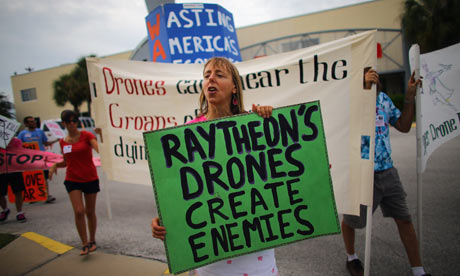
Medea Benjamin of Code Pink protests in August outside a building in Florida
where the group says drones are built. Photograph: Joe Raedle/Getty Images
Not content with a planned march into one of Pakistan's most dangerous regions,
a group of middle-aged American women are considering mounting a hunger strike outside
the US embassy in Islamabad as part a campaign against CIA drone attacks in the country.
Thirty-five activists from Code Pink, a US anti-war group, have gathered
in the Pakistani capital this week as they prepare for an unprecedented
march and political rally in South Waziristan, one of the semi-autonomous tribal areas on the Afghan border,
which is a hotbed of Taliban militancy.
Despite intense publicity surrounding the event, doubts persist over
whether it will be able to take place. Local authorities have expressed
strong doubts about the safety of the march, even though the
Pakistani military has long claimed its operations in the area have brought a semblance of security.
Medea Benjamin, the veteran activist leading the Code Pink delegation,
said: "Frankly, it's a win-win situation for us, whether we get into
Waziristan or not.
"We are going because we are challenging the Pakistani government to
allow us to go to a place that has been off limits but needs to be seen.
And if they try to stop us, it will be clear they do not want the world to see what is going on there."
On Tuesday in Islamabad, the women met retired generals, ambassadors
and even a former head of the notorious military spy agency
Inter-Services Intelligence (ISI), and discussed other tactics to
publicise their cause.
Those included mounting a hunger strike outside the US embassy
in Islamabad. Benjamin said the group was still considering the idea.
"It was something a couple of members of the group brought up,
but we wanted to wait until we got here to see how appropriate
that might be," she said.
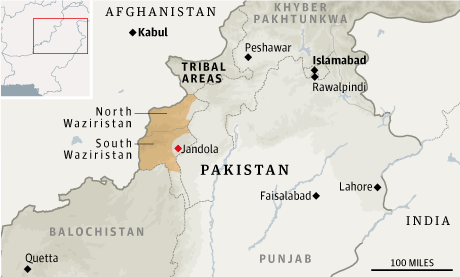
The whole tribal belt has been off limits to foreigners since Taliban fighters started seeking sanctuary there
There was also a lengthy discussion about whether Pakistan,
which publicly decries the drone campaign despite signs that it
continues to give tacit approval, should attempt to shoot down
US drones in its airspace.
On Wednesday, the women met people from North Waziristan who said
they were victims of the US drone campaign, having lost relatives to
missile strikes by the remote-controlled planes.
They will also hold meetings with Pakistani and US government officials.
The group includes Mary Ann Wright, a former US diplomat and army
colonel who condemned her country's covert drone campaign as
Barack Obama's "personal execution device", in reference to the
US president's weekly meeting at which he is reported to choose
targets for missile strikes.
The march, led by Imran Khan and his Pakistan Tehreek-e-Insaf (PTI) party,
is due to take place this weekend. Organisers hope to spend Saturday night
in a town outside the tribal areas and then move on to Jandola, just inside
the border of South Waziristan, where they will hold a rally.
The Taliban have given mixed signals over the march. In August, a
spokesman said Khan would be targeted because he is a "liberal",
but other reports have said the Taliban will support the march.
Supporters say Khan has been assured by General Ashfaq Kayani,
the head of Pakistan's army, that if they go to South Waziristan
they will remain safe.
The ambitions of march organisers have already been
significantly downgraded. The original hope had been to travel to
North Waziristan, a far more dangerous area rife with militants
drawn from across the world.
The vast majority of drone strikes take place there, and the Pakistani
army has almost no influence over the tribal area, where they have
long-resisted US calls to mount military operations.
Nonetheless, although Jandola is in a relatively safe part of
South Waziristan, all of the Federally Administered Tribal Areas (Fata)
have been off limits to foreigners since the tribal belt became a
sanctuary for Taliban groups fighting against Nato troops in Afghanistan
and Pakistani government forces.
Few politicians have dared to campaign in the area. If successful,
the march will cement Khan's position as a pre-eminent opponent of the
US drone campaign.
Code Pink, which originally formed to oppose the second Iraq war,
claimed its anti-drone campaign was still in its infancy.
Benjamin said: "When it comes to drones, we are at the very beginning
of turning public opinion against them in the US."
SOURCE
led by Imran Khan into tribal region bordering Afghanistan
Medea Benjamin of Code Pink protests in August outside a building in Florida
where the group says drones are built. Photograph: Joe Raedle/Getty Images
Not content with a planned march into one of Pakistan's most dangerous regions,
a group of middle-aged American women are considering mounting a hunger strike outside
the US embassy in Islamabad as part a campaign against CIA drone attacks in the country.
Thirty-five activists from Code Pink, a US anti-war group, have gathered
in the Pakistani capital this week as they prepare for an unprecedented
march and political rally in South Waziristan, one of the semi-autonomous tribal areas on the Afghan border,
which is a hotbed of Taliban militancy.
Despite intense publicity surrounding the event, doubts persist over
whether it will be able to take place. Local authorities have expressed
strong doubts about the safety of the march, even though the
Pakistani military has long claimed its operations in the area have brought a semblance of security.
Medea Benjamin, the veteran activist leading the Code Pink delegation,
said: "Frankly, it's a win-win situation for us, whether we get into
Waziristan or not.
"We are going because we are challenging the Pakistani government to
allow us to go to a place that has been off limits but needs to be seen.
And if they try to stop us, it will be clear they do not want the world to see what is going on there."
On Tuesday in Islamabad, the women met retired generals, ambassadors
and even a former head of the notorious military spy agency
Inter-Services Intelligence (ISI), and discussed other tactics to
publicise their cause.
Those included mounting a hunger strike outside the US embassy
in Islamabad. Benjamin said the group was still considering the idea.
"It was something a couple of members of the group brought up,
but we wanted to wait until we got here to see how appropriate
that might be," she said.
The whole tribal belt has been off limits to foreigners since Taliban fighters started seeking sanctuary there
There was also a lengthy discussion about whether Pakistan,
which publicly decries the drone campaign despite signs that it
continues to give tacit approval, should attempt to shoot down
US drones in its airspace.
On Wednesday, the women met people from North Waziristan who said
they were victims of the US drone campaign, having lost relatives to
missile strikes by the remote-controlled planes.
They will also hold meetings with Pakistani and US government officials.
The group includes Mary Ann Wright, a former US diplomat and army
colonel who condemned her country's covert drone campaign as
Barack Obama's "personal execution device", in reference to the
US president's weekly meeting at which he is reported to choose
targets for missile strikes.
The march, led by Imran Khan and his Pakistan Tehreek-e-Insaf (PTI) party,
is due to take place this weekend. Organisers hope to spend Saturday night
in a town outside the tribal areas and then move on to Jandola, just inside
the border of South Waziristan, where they will hold a rally.
The Taliban have given mixed signals over the march. In August, a
spokesman said Khan would be targeted because he is a "liberal",
but other reports have said the Taliban will support the march.
Supporters say Khan has been assured by General Ashfaq Kayani,
the head of Pakistan's army, that if they go to South Waziristan
they will remain safe.
The ambitions of march organisers have already been
significantly downgraded. The original hope had been to travel to
North Waziristan, a far more dangerous area rife with militants
drawn from across the world.
The vast majority of drone strikes take place there, and the Pakistani
army has almost no influence over the tribal area, where they have
long-resisted US calls to mount military operations.
Nonetheless, although Jandola is in a relatively safe part of
South Waziristan, all of the Federally Administered Tribal Areas (Fata)
have been off limits to foreigners since the tribal belt became a
sanctuary for Taliban groups fighting against Nato troops in Afghanistan
and Pakistani government forces.
Few politicians have dared to campaign in the area. If successful,
the march will cement Khan's position as a pre-eminent opponent of the
US drone campaign.
Code Pink, which originally formed to oppose the second Iraq war,
claimed its anti-drone campaign was still in its infancy.
Benjamin said: "When it comes to drones, we are at the very beginning
of turning public opinion against them in the US."
SOURCE


Comment