Announcement

Collapse
No announcement yet.

3rd October - German Unity Day

Collapse
X
 
  • Filter
  • Time
  • Show
Clear All
new posts

  • 3rd October - German Unity Day


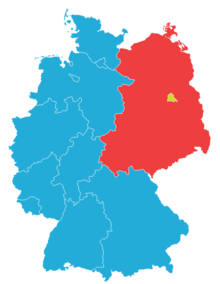
    The Day of German Unity (German: Tag der Deutschen Einheit) is the national day of Germany, celebrated on 3 October as a public holiday. It commemorates the anniversary of German reunification in 1990, when the goal of a unity of Germany that originated in the middle of the 19th century, was fulfilled. Therefore, the name addresses neither the re-union or union, but the unity of Germany. The Day of German Unity on October 3 has been a German national holiday since the reunification in 1990, when the German reunification was brought out in full force. The 3rd of October is a legal holiday of the Federal Republic of Germany.

    An alternative choice to commemorate the reunification could have been the day the Berlin Wall came down—November 9, 1989, which coincided with the anniversary of the proclamation of the German Republic in 1918 and the defeat of Hitler's first coup in 1923. However, 9 November was also the anniversary of the first large-scale Nazi-led pogroms against Jews in 1938 (Kristallnacht), so the day was considered inappropriate as a national holiday. Therefore, 3 October 1990, the day of formal reunification, was chosen instead.


    What implications do the German, Polish and Italian unifications have for Pashtuns? All these countries were principalities often divided and carved up by foreign powers (which is especially for Poland) but they've become unified and successful nation-states in the modern world. What lessons can Pashtuns learn from them?

    Secondly, what are the barriers to Pashtun reunification?
    "If a nation expects to be ignorant and free, in a state of civilization, it expects what never was and never will be".

    "Knowledge will forever govern ignorance; and a people who mean to be their own governors must arm themselves with the power which knowledge gives".

  • #2
    Afghanistan's foreign policy vis-a-vis the Pashtun lands in British India/Pakistan has not shifted over the years, so ultimately the movement for reunification needs to come from the Pashtuns in Pakistan. Whether we agree with their political systems or not, in 1990, at the point of reunification East and West Germans were able to feed their families and read their own histories in their own language. Pashtuns are far from that.

    It's an ideological battle that so far the state of Pakistan has been more successful at. At the individual level, no matter how much states try, they cannot control the ideological will of people (note the Arab Spring), but their it rests. Pashtuns need to want to reunify, and see the economic and cultural benefits of it. For most people the economic argument is the strongest I think. Significantly West Germany was strong enough economically to carry its poorer brother; Afghanistan is in a much weaker position. Hence unfortunately you have Pakistanis who are so full of their own mythical sense of superiority that they will go to the extent of proposing an alternative unification.

    Comment


    • #3
      German unity is a joke. The country is still occupied by the US/NATO, an imposed government is still in place, and the people on whole still resent and are opposed to this US occupation. However, their attitude has not translated into any meaningful movement aside from the Nazis who are still at the fringe of society.

      According to a German student I know, the nationalist trends are rising in Germany (unfortunately coupled with racism too).

      Comment


      • #4
        Germany is not the model you should be looking at for some direction.

        The model to look at is the Islamic spring, especially Egypt.

        Now that is a revolution that is for the history books.

        Comment


        • #5
          What economic benefit did it have when Eastern and Western Germany unified?

          Who was the motor for unification?

          It´s clear that Western Germany pushed for unification although it had to absorb a failed state which increased it´s unemployment numbers and harmed it´s economy very much.

          This is a myth that only economic benefit can unite divided people.

          It may be true for the gready, brother-killing and rivalry-ridden Pashtun nation but not for others. The same goes for Sout Korea who would want unite with North Korea although it would have to take care of millions of starvin people.

          The difference between us and them is that we don´t want to submit to higher well-being of all.....
          Last edited by MostafaM; 10-06-2012, 02:56 PM.
          The only constant is change.

          Comment

          Working...
          X