
 Tweet
Billions spent on Afghan
police but brutality,
corruption prevail

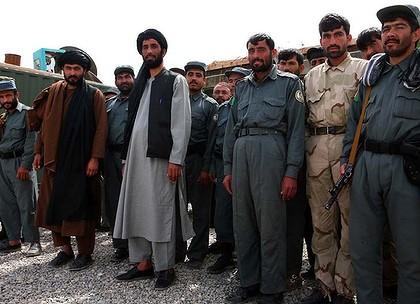
Graduate patrol men stand in line at the Helmand Police training centre near
Lashkar Gah in this December 6, 2010
An Afghan policeman shot dead taxi driver Mohammad Jawid
Amiri six month ago, for no apparent reason. According to a
Kabul police official, the shooting was an accident, and the
offending policeman is now behind bars.
That's news to the family of 27-year-old Amiri.
They say the only contact with the policeman they had since the shooting
was when his family offered a sheep and three bags each of rice and flour
as compensation, but only if the Amiris signed papers saying their son died
a traffic accident, and not from gunshot wounds.
"My father tore up the papers and said he will never forget him," said
Sahida, the victim's older sister. "Maybe the policeman is in prison or
maybe he has been freed. We don't even know why he shot my brother."
Amiri's death is part of a expanding dossier of unresolved police violence
and corruption cases that have alienated Afghans, and which calls into
question the billions of dollars spent to build up civic institutions in the
war-torn nation.
About $29 billion has been spent on the Afghan police since the Taliban
were ousted in late 2001, with more to come as the U.S. and NATO-led
International Security Assistance Force steps up training ahead of plans to
withdraw combat troops by the end of 2014 and hand over security to
Afghans.
The Afghan police force now stands at around 142,000, although desertion
rates are high. But ordinary Afghans are intimidated by the force, which
has high levels of drug abuse and desertion, especially when officers are
posted to areas away from their home villages or find themselves
unexpectedly on the frontline of the battle against Taliban insurgents.
According to the International Crisis Group (ICG), the police and Afghan
troops trained to date "have thus far proved unable to enforce the law,
counter the insurgency or even secure the seven regions" recently handed
over to them.
Police earn 10,000-13,500 Afghanis ($212-287) a month.
That's better than most in Afghanistan which has an annual per capita
income of about $600 and where the 30 million people have an average life
expectancy of 44 years.
CORRUPT, CRIMINAL
Afghans do not hold the police in high regard.
Three in five see the police as corrupt, more than a quarter have
personally seen a policeman use narcotics, and more than half think filing a
complaint about police misdeeds would have no effect on the situation or
make it worse, according to a U.N. survey from late last year.
Resentment also runs high against police seeking bribes to pad their salary.
Ahmad Zeya Durani, 26, and his three younger brothers sell video games,
mobile phone accessories, CDs and DVDs on the sidewalk at Nader Pashton
market in Kabul, barely making a living. They pay police 30 Afghanis a day
for the privilege.
"If you have a good income you have to pay up to 80 or 100 Afghanis each
day," Durani said. "There were hundreds of peddlers in this street who all
pay the police."
And it's not just corruption.
Nearly 200 policemen were accused of murder and just over 4,600 were
involved of crimes in 3,026 separate cases sent to the attorney general in
Kabul in year that began March 2010, said Lieutenant General Mohammad
Rahim Hanifi, head of the top prosecutor's Statistics and Analysis
department.
Police are also suspected of carrying out gang rapes, but arresting the
offenders falls to their colleagues, who often just ignore the cases, or
intimidate those seeking justice, Hanifi said.
"We have some suspects who don't come to us for investigation and we
don't have the power to bring them here. It is the police who must arrest
them and bring them to us," he said.
TRAINING, RECRUITMENT BLAMED
Illiteracy, low pay, relatively short training periods for new recruits, and
perhaps most crucially, the potential ability to escape the law are among
the main reasons experts give for police crime.
"Six weeks of training is not enough for a policeman to know his duty and
how to behave with people," said former interior minister, Taj Mohammad
Wardak.
But he argues that, while police crime figures are worrying, they represent
only a tiny portion of a large and growing force.
Many Afghanis are not convinced.
"I usually tell my friends and family not to deal with police and I had told
Jawid too, because they never feel responsible for the public," said
Mohammad Sharif Amiri, an older brother of dead taxi driver Jawid.
($1=47 Afghani)
Billions spent on Afghan police but brutality,corruption prevail | Reuters
police but brutality,
corruption prevail
Graduate patrol men stand in line at the Helmand Police training centre near
Lashkar Gah in this December 6, 2010
An Afghan policeman shot dead taxi driver Mohammad Jawid
Amiri six month ago, for no apparent reason. According to a
Kabul police official, the shooting was an accident, and the
offending policeman is now behind bars.
That's news to the family of 27-year-old Amiri.
They say the only contact with the policeman they had since the shooting
was when his family offered a sheep and three bags each of rice and flour
as compensation, but only if the Amiris signed papers saying their son died
a traffic accident, and not from gunshot wounds.
"My father tore up the papers and said he will never forget him," said
Sahida, the victim's older sister. "Maybe the policeman is in prison or
maybe he has been freed. We don't even know why he shot my brother."
Amiri's death is part of a expanding dossier of unresolved police violence
and corruption cases that have alienated Afghans, and which calls into
question the billions of dollars spent to build up civic institutions in the
war-torn nation.
About $29 billion has been spent on the Afghan police since the Taliban
were ousted in late 2001, with more to come as the U.S. and NATO-led
International Security Assistance Force steps up training ahead of plans to
withdraw combat troops by the end of 2014 and hand over security to
Afghans.
The Afghan police force now stands at around 142,000, although desertion
rates are high. But ordinary Afghans are intimidated by the force, which
has high levels of drug abuse and desertion, especially when officers are
posted to areas away from their home villages or find themselves
unexpectedly on the frontline of the battle against Taliban insurgents.
According to the International Crisis Group (ICG), the police and Afghan
troops trained to date "have thus far proved unable to enforce the law,
counter the insurgency or even secure the seven regions" recently handed
over to them.
Police earn 10,000-13,500 Afghanis ($212-287) a month.
That's better than most in Afghanistan which has an annual per capita
income of about $600 and where the 30 million people have an average life
expectancy of 44 years.
CORRUPT, CRIMINAL
Afghans do not hold the police in high regard.
Three in five see the police as corrupt, more than a quarter have
personally seen a policeman use narcotics, and more than half think filing a
complaint about police misdeeds would have no effect on the situation or
make it worse, according to a U.N. survey from late last year.
Resentment also runs high against police seeking bribes to pad their salary.
Ahmad Zeya Durani, 26, and his three younger brothers sell video games,
mobile phone accessories, CDs and DVDs on the sidewalk at Nader Pashton
market in Kabul, barely making a living. They pay police 30 Afghanis a day
for the privilege.
"If you have a good income you have to pay up to 80 or 100 Afghanis each
day," Durani said. "There were hundreds of peddlers in this street who all
pay the police."
And it's not just corruption.
Nearly 200 policemen were accused of murder and just over 4,600 were
involved of crimes in 3,026 separate cases sent to the attorney general in
Kabul in year that began March 2010, said Lieutenant General Mohammad
Rahim Hanifi, head of the top prosecutor's Statistics and Analysis
department.
Police are also suspected of carrying out gang rapes, but arresting the
offenders falls to their colleagues, who often just ignore the cases, or
intimidate those seeking justice, Hanifi said.
"We have some suspects who don't come to us for investigation and we
don't have the power to bring them here. It is the police who must arrest
them and bring them to us," he said.
TRAINING, RECRUITMENT BLAMED
Illiteracy, low pay, relatively short training periods for new recruits, and
perhaps most crucially, the potential ability to escape the law are among
the main reasons experts give for police crime.
"Six weeks of training is not enough for a policeman to know his duty and
how to behave with people," said former interior minister, Taj Mohammad
Wardak.
But he argues that, while police crime figures are worrying, they represent
only a tiny portion of a large and growing force.
Many Afghanis are not convinced.
"I usually tell my friends and family not to deal with police and I had told
Jawid too, because they never feel responsible for the public," said
Mohammad Sharif Amiri, an older brother of dead taxi driver Jawid.
($1=47 Afghani)


Comment