Announcement

Collapse
No announcement yet.

Pakistan becomes first associate member of CERN from Asia

Collapse
X
 
  • Filter
  • Time
  • Show
Clear All
new posts

  • Pakistan becomes first associate member of CERN from Asia

    20 June 2014

    Pakistan is first Asian country to become an associate member of the organization.


    Pakistan has formally become member of the General Council of European Center of Nuclear Research (CERN).

    The forum has officially accepted Pakistan’s application for associate membership of CERN.

    The Centre is one of the world’s leading scientific organizations conducting research on high energy particle physics since 1954.

    Pakistan is the first Asian country to become an Associate Member of the Organization. The only two other associate members of CERN are Turkey and Serbia.

    Pakistan’s associate membership of CERN is an acknowledgement that it is a responsible nuclear state with strong credentials in using civil nuclear technology for peaceful purposes.

    "[B][SIZE="3"]Seer Speen Wazeer[/SIZE][/B]"

  • #2
    From stealing centrifuge at urenco,Pakistan indeed has come such a longway
    "[B][SIZE="3"]Seer Speen Wazeer[/SIZE][/B]"

    Comment


    • #3
      lol, do they need toilet cleaners over there?

      Comment


      • #4
        I am sure they won't hire you even for toilet cleansing

        ONTOPIC:

        I am waiting for the latest research output list for 2013,Was to be updated this may.Not sure what happened.

        Nust increase its publication by almost 215 within an year while comsat 110+

        A space dedicated to displaying current content on the varying positive approaches of climbing the ladder in the Pashtun heartland.
        Last edited by Da Bannu Mazdigar; 06-21-2014, 09:37 AM.
        "[B][SIZE="3"]Seer Speen Wazeer[/SIZE][/B]"

        Comment


        • #5
          Lol--CERN people should be beware of thieves and terrorists.

          Comment


          • #6
            hyperion


            Up until, 2011, Pakistan contributed in:

            1. Detector construction

            2. Detector simulation

            3. Physics analysis

            4. Grid computing

            5. Computational software development

            6. Manufacturing of mechanical equipment

            7. Alignment of the CMS (Compact Muon Solenoid) tracker using lasers

            8. Testing of electronic equipment

            9. Barrel Yoke: 35 Ton each feet made in Pakistan

            10. Assembly of CF (Carbon Fiber) Fins for the Silicon Tracker’s TOB (Tracker Outer Barrel).

            11. 245 of the 300 CMS chambers required were made in Islamabad.

            And let's nor forget Grand Daddy Dr. Abdus Salam........... remove him from the equation and you're left with?
            "[B][SIZE="3"]Seer Speen Wazeer[/SIZE][/B]"

            Comment


            • #7
              "It would be embarrassing if Pakistan becomes an associate member of CERN before India", said eminent Indian scientist and Homi Bhabha Professor Bikash Sinha in early June, 2014. Well, it has happened this week. Pakistan is now an associate member of CERN, the world's largest and most prestigious center for science research.


              Large Hadron Collider at CERN
              Pakistan is the first Asian country and only the third in the world after Turkey and Serbia to be honored with CERN's associate membership. The status of associate member is a step before full membership. As an associate member, Pakistan is entitled to attend open and restricted sessions of the organization.

              The CERN was founded in 1953 by 12 European nations including Belgium, Denmark, France, the Federal Republic of Germany, Greece, Italy, the Netherlands, Norway, Sweden, Switzerland, the United Kingdom and Yugoslavia. The organization was subsequently joined by Austria (1959), Spain (1961-1969, re-joined 1983), Portugal (1985), Finland (1991), Poland (1991), Czechoslovak Republic (1992), Hungary (1992), Bulgaria (1999) and Israel (2014). The Czech Republic and Slovak Republic re-joined CERN after their mutual independence in 1993. CERN now has 21 member states and Romania is a candidate to become a member state. Serbia is an associate member in the pre-stage to membership. "Observer" status allows non-member states to attend council meetings and to receive council documents, without taking part in the decision-making procedures of the organization. Over 600 institutes and universities around the world use CERN's facilities.

              Pakistan's National Center for Physics (NCP) has been collaborating with CERN since 2000. Pakistan's associate membership application was unanimously approved a meeting of the CERN council on September 17 this year. The final approval came this week after a report of a CERN “fact-finding mission” to Pakistan in February 2014.

              CERN is leading the most high-profile effort to find "God Particle" about 300 ft below ground in a tunnel at the French-Swiss border. Buried there is a massive particle accelerator and super collider called LHC (Large Hadron Collider) run by CERN (European Organization of Nuclear Research), which has two beams of particles racing at nearly the speed of light in opposite directions and the resulting particles produced from collisions are being detected by massive detectors in the hope of experimentally finding the fundamental particle of which everything in the universe is built from: God Particle.


              Among the world scientists working at CERN on LHC project is Professor Hafeez Hoorani of Pakistan's Quaid-e-Azam University in Islamabad. He is one of 27 Pakistani scientists at CERN. Hoorani has acknowledged that Pakistan government's support for Pakistani scientists' serious involvement at CERN materialized only after 1999, the year former President Musharraf's government assumed power. He also gives credit to Dr. Abdus Salam, Pakistan's only Nobel Laureate, for inspiring him and his colleagues to pursue serious scientific research. Here's what Professor Hoorani says about Pakistan's involvement in LHC and CERN:

              When I first came to CERN, I was mainly working on technical things but became increasingly involved in political issues. In 1999, I went back to Pakistan to set up a group working on different aspects of the LHC project. There I had to convince my people and my government to collaborate with CERN, which was rather difficult, since nobody associated science with Switzerland. It is known as a place for tourism, for its watches, and nice places to visit.

              However, Pakistan already had an early connection to CERN through the late Abdus Salam, the sole Nobel laureate from Pakistan in science and one of the fathers of the electroweak theory. CERN has been known to the scientific community of Pakistan since 1973 through the discovery of neutral currents which eventually led to the Nobel Prize for Salam. We are contributing much more now because of the students who worked with Salam, who know his theories and CERN, and who are now placed at highly influential positions within the government of Pakistan. They have helped and pushed Pakistan towards a very meaningful scientific collaboration with CERN. People now know that there is an organization called CERN. It took a long time to explain what CERN is about, and I brought many people here to show them, because they did not imagine CERN this way. Many people support us now which gives us hope…”


              In addition to the 27 scientists, Pakistan has made material contributions to the tune of $10m. Pakistan signed an agreement with CERN which doubled the Pakistani contribution from one to two million Swiss francs
              . And with this new agreement Pakistan started construction of the resistive plate chambers required for the CMS muon system. While more recently, a protocol has been signed enhancing Pakistan’s total contribution to the LHC program to $10 million.


              Pakistan has contributed the LHC in numerous ways including some of the following in particular:

              1. Detector construction
              2. Detector simulation
              3. Physics analysis
              4. Grid computing
              5. Computational software development
              6. Manufacturing of mechanical equipment
              7. Alignment of the CMS (Compact Muon Solenoid) tracker using lasers
              8. Testing of electronic equipment
              9. Barrel Yoke: 35 Ton each feet made in Pakistan
              10. Assembly of CF (Carbon Fiber) Fins for the Silicon Tracker’s TOB (Tracker Outer Barrel).
              11. 245 of the 300 CMS chambers required were made in Islamabad.

              Pakistan has had an impressive 50 per cent increase in the number of research publications during just the last two years, going up from 3,939 to 6,200. This has been the second highest increase worldwide, according to SCimago, the world's leading research database. The latest QS world rankings include 10 Pakistani universities among Asia's top 300


              Rise of research and publications at Pakistani universities began during Musharraf years when the annual budget for higher education increased from only Rs 500 million in 2000 to Rs 28 billion in 2008, to lay the foundations of the development of a strong knowledge economy, according to former education minister Dr. Ata ur Rehman. Student enrollment in universities increased from 270,000 to 900,000 and the number of universities and degree awarding institutions increased from 57 in 2000 to 137 by 2008. Government R&D spending jumped seven-fold as percentage of GDP from 0.1% of GDP in 1999 to 0.7% of GDP in 2007.


              News, analysis and opinions about India, Pakistan, US, Canada, Europe, Mid East, South Asia, Silicon Valley, High Technology, Economy, Politics, World
              "[B][SIZE="3"]Seer Speen Wazeer[/SIZE][/B]"

              Comment


              • #8
                Along with nuclear advancement and defense field, Pakistan need to focus on poverty alleviation, human rights, development, cleansing its constitution from Islamism, controlling all Mullahs in all the mosques of the country as Mullahs say what they want, there is no control from state and many other socio-economic issues.

                Pakistan should try to be member of G20 if not G8. A nuclear power but poor developing country do not match. This is communist style to be rich in defense but poor economically.

                Comment


                • #9
                  Originally posted by Badlun View Post
                  Along with nuclear advancement and defense field, Pakistan need to focus on poverty alleviation, human rights, development, cleansing its constitution from Islamism, controlling all Mullahs in all the mosques of the country as Mullahs say what they want, there is no control from state and many other socio-economic issues.

                  Pakistan should try to be member of G20 if not G8. A nuclear power but poor developing country do not match. This is communist style to be rich in defense but poor economically.
                  Slowly we are expanding the basket

                  Poverty


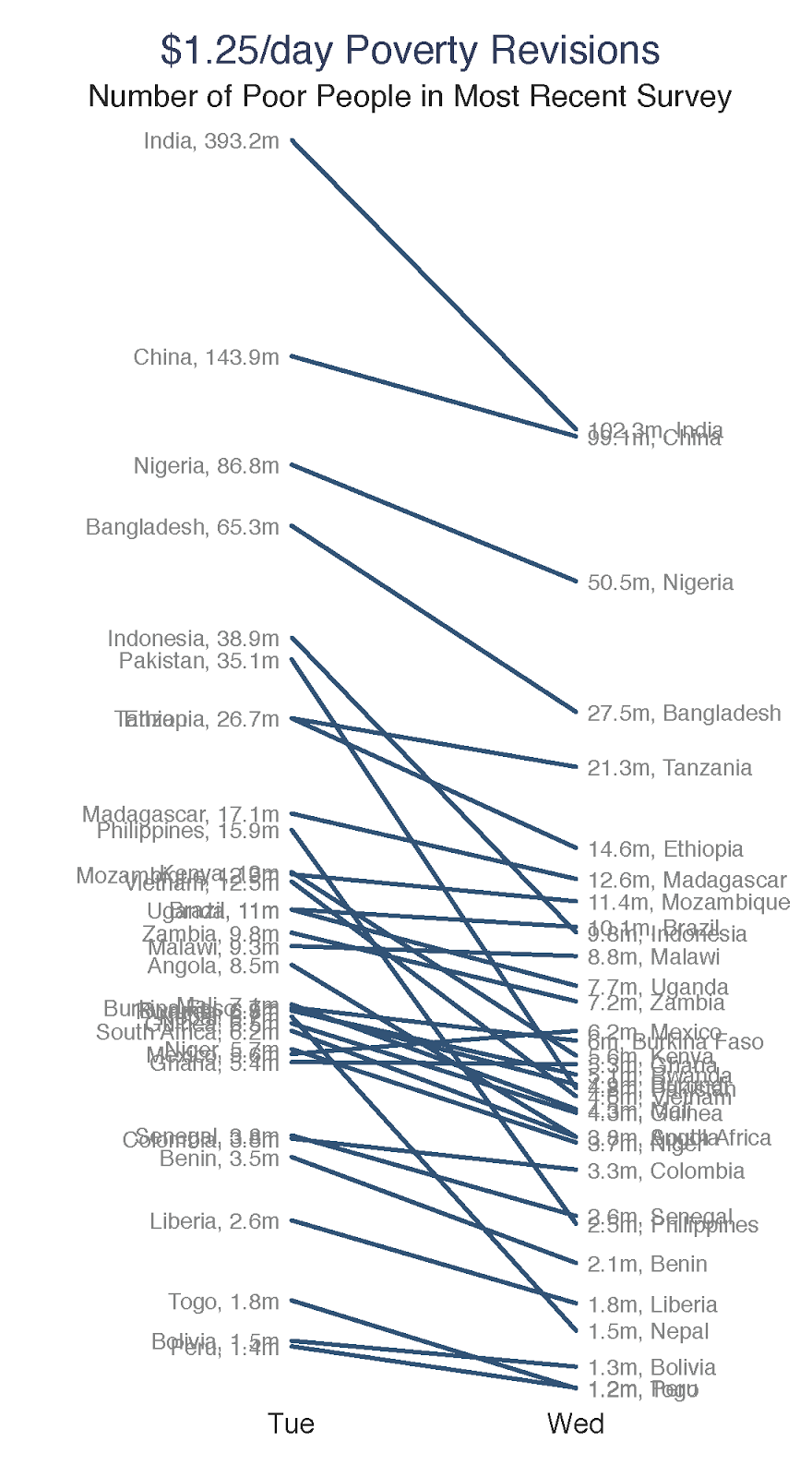
                  World Bank Reports Sharp Downward Revision in Pakistan Poverty


                  Development


                  I hope you do know PMLN infrastructure history.All the pronvinces in Pakistan are growing except Sindh under PPP

                  This thread is regularly updated,Can give you a rough idea of the scale of development being done in Pakistan.In Short i have never seen this thread as active


                  Islamism/Mullah Control


                  This is the part we surely still lack,Anyway Govt is mulling to allow only registered Madrassa and the Prime Mullah of the Madrassah to be atleast having a master Degree

                  Part of G20


                  Pakistan will be part of G20 most probably in 2018-19.Expect it earlier if we hit 5.1% Growth rate this year

                  As per World bank 2012,Pakistan ranks 24th.As per ICP report released this May Suggest a increase of 80Billion dollars b/w 2012-13.But i would still wait for the latest report.My estimates are that for 2014 Pakistan GDP is 960-980Bn $ and to hit 1Trillion mark this year


                  We cannot become part of G8 in this century.Pakistan Though has the potential to be part of Top 12 by 2050 while various prediction put it at 18th by 2050.
                  "[B][SIZE="3"]Seer Speen Wazeer[/SIZE][/B]"

                  Comment


                  • #10
                    Yes, maybe pakistan should first deal with the poverty in the country, stabilize it and stop exporting terrorism to its neighbouring countries like Afghanistan and india then they can jump in with the big boys when it comes to science.

                    Pakiland is not taking baby steps which is why they will always be a failed state and will plunge themselves into an economic crisis.
                    Last edited by Kushan Prince; 06-26-2014, 12:23 AM.
                    "Revenge is a dish best served cold".

                    -Old Pashtun proverb


                    "My Pashtun Pride i will not hide!"

                    Comment


                    • #11
                      Originally posted by Kushan Prince View Post
                      Yes, maybe pakistan should first deal with the poverty in the country, stabilize it and stop exporting terrorism to its neighbouring countries like Afghanistan and india then they can jump in with the big boys when it comes to science.

                      Pakiland is not taking baby steps which is why they will always be a failed state.
                      I'm so glad our Afghan brothers worry so much for us. <3

                      Comment

                      Working...
                      X