
 Tweet
SHOULD A SECULAR SOCIETY HONOR A CONTROVERSIAL FIGURE WHO IS NOW AN ICON OF COMMUNALISM AND ISLAMPHOBIA IN BHARAT?
There are fault lines between the Hindu Muslim ecumenical harmony. No where are the fault lines sharper than in the discussion of the protagonists in Battle of Pratapgarh fought on November 30, 1659. The battle was fought between the Adil Shah’s forces (an ally of the Mughals) and the renegades who were against the state. To say the very least the controversial Shivaji is not considered a person of any high reputation by contemporary historians. Secular Indian consider it just a battle between two armies, however the Hinduvata consider is a battle between Muslims and Hindus.The statue of Shivaji stands in Mumbai. This is ironic–because Bombay was built by the British after the Port of Surat had silted over. Surats merchants disliked having to bribe and pacify the warrior Shivaji, who looted Surat seven times beginning in 1664. These merchants were moved to Bombay by the British.
It is pedagogical to note that both armies had Hindus and Muslims.
Afzal Khan’s army had many Hindus, and the several able generals of Shivaji were Muslims (Siddi Halal, Siddi Wahwah,Nur Khan Baig, Qazi Haider, Shama Khan etc). This was not a battle between Hindus and Muslims, it is was battle for the integrity of the state–the same battle that raged between Delhi and the South (during the reign of Aurenzeb)–the same battle that rages between Delhi and the Naxals and Tamils today.
By eulogizing the local insurgent as a hero, the Hindu Mahasabah is in fact encouraging the Naxals to claim that Delhi’s rule is illegal and that it is OK to rebel against the central authority. If Shivijai’s struggle was against invaders, so the Dalit struggle against the Aryan armies of Arjun was also legitimate.
In a secular society the country the rights of the secularists, the minorities and Muslims are being trampled. Building a statue for a controversial figure who now represents opposition to all Muslims will surely exacerbate Hindu-Muslim relations not only in Bharat but on her bloody borders.
Let us look into the seeds of time and see what makes Shivaji such a controversial figure.
New versions of revisionist history are being propagated , but credible historians agree on these facts which are not in dispute.
- Facing a huge Army Shivaji sent a letter saying he was not eager to face Afzal Khan in battle, and he wanted a negotiated settlement.
- Facing imminent defeat by the overwhelming force Shivaji decided to meet Afzal Khan under the guise of diplomatic negotiations.
- Afzal Khan, after leaving Bijapur wanted agreed to meet Shivaji in an open ground without arms and under normal diplomatic norms of peace and honesty.
- Face to face diplomacy was considered a matter of integrity for the Mughals.
- A meeting was arranged between Afzal Khan and Shivaji at the foothills of Fort Pratapgad.
- A wanted criminal, Shivaji was was not greeted with a rainfall of arrows and was not attacked by 25 Adil Shah’s soldiers. He was accorded safe passage.
- Afzal Khan had a large physical stature leading a battle hardened veteran army. He considered this assignment as a small matter of stamping out a pesky regional chieftain who was physically weak and in to position to fight the mighty Adil Shahi Army.
- Shivaji prepared carefully and diligently for this encounter; he secretly armed himself with sharp metal razor weapon called wagh nakh (tiger claw), and chilkhat (armour) prior to the meeting.
- Afzal Khan embraced him before the commencement of supposed negotiations
- During the embrace Shivaji surreptitiously attacked AfzalKhan with the “wagh nakh” and “bich’hwa“, spilling his blood and entrails on the ground.
His fight was not for hindu kingdom as painted by hindu fanatics. His most trusted general in all his campaigns was Haider Ali Kohari; Darya Sarang was chief of armory; Ibrahim Khan and Daulat Khan were prominent in the navy; and Siddi Ibrahim was chief of artillery.
One third of his supporter were MUSLIMS & he had pathans support as well after pashtun rebellion against mughal empire due to failed ECONOMIC policy.
Top officials with him include: 1) Siddi Halal, 2) Siddi Wahwah, 3) Nur Khan Baig, 4) Qazi Haider, 5) Shama Khan
One third of his supporter were MUSLIMS & he had pathans support as well after pashtun rebellion against mughal empire due to failed ECONOMIC policy.
Top officials with him include: 1) Siddi Halal, 2) Siddi Wahwah, 3) Nur Khan Baig, 4) Qazi Haider, 5) Shama Khan

The Mughal forces under Shaista Khan (January 1660) who took revenge of the murder of their ally Adil Shah were of course a huge conglomeration of Sikh, Marhatta, Rajput, Hindu, Muslim, and other forces. In fact one of Aurenzeb’s disowned sons who did not succeed in overthrowing the king was part of the Shivaji army.
Aurenzeb had an ecumenical household. He had at least two Hindu wives Nawab Bai, daughter of Kashmir’s Raja Raju, and Udaipuri Mahal.

shiviji statue
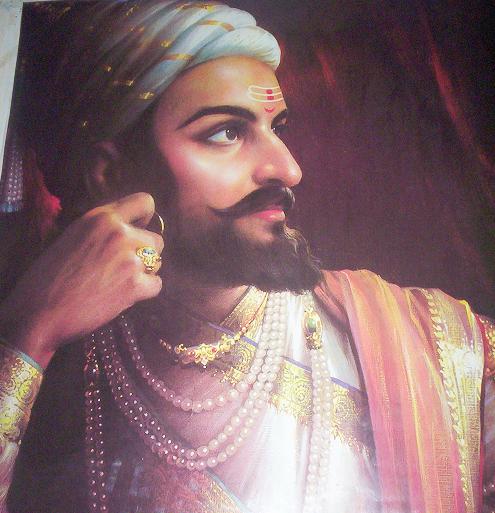
shiviji


 so much obsession with India... its getting sad now.
Comment