
 Tweet
Tweet
Got some wannabe Shakespear's about lol
-
----------
*You cannot climb the ladder of success with your hands in your pockets*
Originally posted by Karachi -
“Just as there are physical monsters, can there not be mental or psychical monsters born? The face and body may be perfect, but if a twisted gene or malformed egg can produce physical monsters, may not the same process produce a malformed soul?
Monsters are variations from the accepted normal to a greater or a less degree. As a child may be born without an arm, so one may be born without kindness or the potential of conscience. A man who loses his arms in an accident has a great struggle to adjust himself to the lack, but one born without arms suffers only from people who find him strange. Having never had arms, he cannot miss them. To a monster the norm must seem monstrous, since everyone is normal to himself. To the inner monster it must be even more obscure, since he has no visible thing to compare with others. To a criminal, honesty is foolish. You must not forget that a monster is only a variation, and that to a monster the norm is monstrous.”
After a while you'll think no thought the others do not think. You'll know no word the others can't say. And you'll do things because the others do them. You'll feel the danger in any difference whatever-a danger to the crowd of like-thinking, like-acting men...Once in a while there is a man who won't do what is demanded of him, and do you know what happens? The whole machine devotes itself coldly to the destruction of his difference. They'll beat your spirit and your nerves, your body and your mind, with iron rods until the dangerous difference goes out of you. And if you can't finally give in, they'll vomit you up and leave you stinking outside--neither part of themselves, nor yet free...They only do it to protect themselves. A thing so triumphantly illogical, so beautifully senseless as an army can't allow a question to weaken it.
..in all of history, men have been taught that killing of men is an evil thing not to be countenanced. Any man who kills must be destroyed because this is a great sin, maybe the worst we know. And then we take a soldier and put murder in his hands and we say to him, "use it well, use it wisely. Go out and kill as many of a certain kind or classification of your brothers as you can. And we will reward you for it because it is a violation of your early training.
We have only one story. All novels, all poetry, are built on the neverending contest in ourselves of good and evil. And it occurs to me that evil must constantly respawn, while good, while virtue, is immortal. Vice has always a new fresh young face, while virtue is venerable as nothing else in the world is.
But the Hebrew word, the word timshel 'Thou mayest’ gives a choice. It might be the most important word in the world. That says the way is open. That throws it right back on a man. For if ‘Thou mayest’ -it is also true that ‘Thou mayest not...”
"To burn always with this hard gemlike flame, to maintain this ecstasy, is success in life."
Comment
-
"Fundamentalism is a religious movement, a theological & philosophical stand, a political and social force. I regard it most basically as a particular variety of psychological development. Fundamentalists of all religious and political varieties share the same character traits. It is the psychological character of the fundamentalist that is at the root of the ideological interpretation termed "fundamentalism," not an intellectual or spiritual concept.
"Fundamentalist" is a term sometimes used to refer to anyone who is intolerant of other's beliefs. Fundamentalism is "not so much an ideology as it is an attitude, an attitude of intolerance, incivility and narrowness," says Walter Shurden, professor of Christianity and director of the Center for Baptist Studies at Mercer University. "It is an attitude that says, 'We have the truth, the whole truth and nothing but the truth, and we are going to impose it on you and control the system so that you will have to knuckle under to it.'" As anyone who has ever attended a meeting of two or more activists can attest, that attitude can be found at all points on the political and religious spectrum.
There are, however, specific traits to what can be called "right wing" fundamentalism (of any religion) that what is sometimes called "left wing fundamentalism" lacks: authoritarianism, sexual guilt, and attitudes toward women and homosexuals.
Psychological traits of fundamentalism:- A strictly hierarchical and authoritarian worldview. Everything has to have a First, a Somebody in Charge. In any partnership, one partner has to have the deciding vote. Groups and societies work best with rigidly defined roles and stratifications. (There are people who believe this way who are not fundamentalists: at least, not religious fundamentalists.)
- Ethical development at the "reward and punishment" stage: morality must be defined and enforced by an external authority.
- A lot of guilt and fear about sex.
- Basic distrust of human beings; certainty that "uncontrolled," human beings will be bad and vicious, particularly in sexual ways.
- Low tolerance for ambiguity. Everything must be clear cut, black and white. Nothing can be "possibly true but unproven at this time, we're still studying it." Fundamentalists regard science as flawed precisely because science changes. (A striking characteristic of fundamentalists is that their response to any setback which may instill doubt is to step up evangelizing for converts.)
- Literalism, usually including a limited sense of humor.
- Distrust of their own judgment, or any other human being's judgment.
- Fear of the future. The driving motivation of fundamentalism appears to outsiders to be fear that oneself or the group one identifies with is losing power and prerequisites and is in danger from others who are gaining power. This is not how fundamentalists put it.
- A low self-esteem that finds satisfaction in being one of the Elect, superior to all others. It seems to be particularly rewarding to know that rich people have a real hard time getting into Heaven.
The life experience of fundamentalist that seems to encourage these traits include:
- Conditional love: parents, or other authority figures, withheld love to control behavior.
- Other factors -- sometimes mental, emotional, or even physical abuse -- that minimized self-esteem.
- For those who grew up fundamentalist, the church was the central activity of family life, all else was subsidiary to the church, and social interaction with "non-believers" was discouraged, except when evangelizing.
- Those who have converted to fundamentalism often grew up without any firm philosophical framework, or experienced some trauma that destroyed their former framework. They were at a time in their lives when they needed absolute Answers.
Fundamentalist groups reinforce these traits:
- They insist on a rigid hierarchy of authority. The more extreme the group, the more authority is concentrated in one central figure.
- The group, and the authority figure(s) within the group, withhold or bestow love to control behavior. Misbehaving members are cut off from communication.
- They magnify current social and individual evils and dwell on the "innate wickedness of man."
- Sexual "immorality" is often their central cause.
- They promote a Truth which is superior to all other truths because it is absolute and unchanging.
- They promote distrust of one's personal judgment, being subject instead to the given truths of the group, the judgment of the church as a body, or the proclamations of a central authority figure.
- They are apocalyptic, foretelling an immanent and horrifying future which only the faithful will survive. Any disaster in the news is magnified as "a sign of the apocalypse.
The Alternative to Fundamentalism
Regardless of belief system, an individual is no longer a "fundamentalist" when one develops:- An unconditional self-esteem and (usually in consequence) an unconditional love of others.
- A tolerance -- even enjoyment -- of ambiguity and diverse beliefs. One can cheerfully live with the fact that one's neighbor on one side believes that his little blue pickup truck is God and one's neighbor on the other side doesn't believe in God at all, and feel no compulsion to convert either of them. One is not frightened to question one's faith or explore alternatives.
- Free social and intellectual interaction with others, beyond -- or even without -- evangelism.
- A trust that one can "figure things out," along with a willingness to learn from others and to change one's mind.
- A faith that whatever the fluctuations in life and society, things can and will get better. A feeling of personal responsibility and resolve to make it so.
- A sense of humor.
It is not necessary to abandon all personal faith and beliefs in order to be tolerant of others. The majority of the followers in any of the world's religions are able to hold a strong personal belief and not feel threatened that others hold different beliefs.
How does anyone ever become an ex-fundamentalist? Any or all of these factors seem effective:
- Relationships with "non-believers" who become emotionally valued.
- Intellectual process: a build-up of contradictions between taught morality and the behavior of church authorities and members; unresolved questions in study of the Bible; what is taught about the world vs observation.
- Receiving unconditional love and acceptance from a non-fundamentalist.
- A strengthened self-esteem, with the loss of the need for others to be Wrong.
- A spiritual epiphany, with a new faith that one's relationship with God is not conditional on "perfect" faith or behavior, that it can grow and change."
"To burn always with this hard gemlike flame, to maintain this ecstasy, is success in life."
Comment
-
september 2002
"To burn always with this hard gemlike flame, to maintain this ecstasy, is success in life."
Comment
-
"To burn always with this hard gemlike flame, to maintain this ecstasy, is success in life."
Comment
-
i don't know what to be more concerned abut. how easily our people are manipulated or how ironic and messed up the american military system is.

"To burn always with this hard gemlike flame, to maintain this ecstasy, is success in life."
Comment
-
"To burn always with this hard gemlike flame, to maintain this ecstasy, is success in life."
Comment
-

"To burn always with this hard gemlike flame, to maintain this ecstasy, is success in life."
Comment
-
^ I wonder what was the occasion when he said thatComment
-
Old is not about age, its about a state of mental decay.Comment
-

Comment
-
"To burn always with this hard gemlike flame, to maintain this ecstasy, is success in life."
Comment
-
When someone passes away it is the end.
His past and future, all the dreams he once had, they disappear along with him.
All of the ties that bind him to the living are severed, all but one, the most important of all : people. Parents, friends, siblings, lovers - the people who mattered to him.
And these people, the ones left behind, are joined together in a great circle by their shared memories of him.
A circle of friendship, trust and sacrifice that grows larger and stronger as time passes.
But we're running out of time...
Comment
-
To support a friend in times of great hardship that they have brought upon themselves or to condemn them for it till they stop acting foolish..
"To burn always with this hard gemlike flame, to maintain this ecstasy, is success in life."
Comment
-
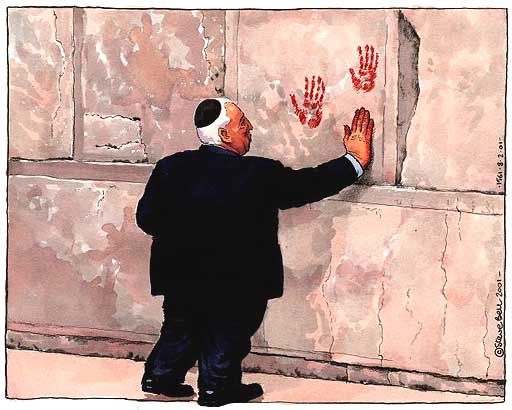
Is this really a racist joke?

Comment


Comment