

 Tweet
Tweet
Originally posted by ذو الفقار
View Post
-
The Arabic dress doesn't look more formal. If your "shalwar" is raised above your ankles it doesn't look odd or funny. That is the correct way of wearing a "partooga" or "shalwar" as you may call it. Pashtuns have always worn the "partoog" above the ankle, and I have seen many other Pakistanis look at it and think it strange as they are just not used to seeing it like that. -
Originally posted by Charsi Malang View Post
Long kurta looks nice with white shelwar. Kurta is dress for special occasions especially weddings and Eidain. It is a conservative dress as it is longer than ordinary kameez, and usually has some kind of design or embroidery.
Sherwani is also a very formal dress, nothing wrong with it, especially since it is unique to Muslims.
However, I dont like pyjamas because they are tight fitting to the legs, and this is something which Hindus and Sikhs also wear so it should be avoided.[SIZE="4"][FONT="HardTimesW01-Roman"]My Blog
[url]www.salvation-from-hell.com[/url][/FONT][/SIZE]Comment
-
Originally posted by Charsi Malang View Post
The point is that only Muslims wear the Thawb or Qamees in this time, so it has become a distinctive Muslim dress. Muslims should always prefer that dress which is distinctive of Muslims, such as Qamees/Thawb, skullcap/kufi/topi, and our distinctive style of Amama (turban). The one who wears such a dress is unmistakably Muslim, you will never see a non-Muslim wearing such a dress. The point is to be distinct from non-Muslims as much as possible, especially in terms of visible appearance and dress.
Also it is a very modest and conservative dress, loose fitting, and makes the wearer feel "holier" and more Islamic. The favorite dress of Prophet (Sallallaho alaihi wasallam) was this Qamees with full sleeves. Over it he would wear a ridaa or cloak, especially for formal occasions.
Furthermore, keeping the head covered, usually with a skullcap, is a very important marker of Muslim males. Nowadays it is very rare that Muslim males keep their head covered in public with a skullcap/kufi which is very tragic. Only very religiously-observant Muslims are keeping this Sunna alive.
[SIZE="4"][FONT="HardTimesW01-Roman"]My Blog
[url]www.salvation-from-hell.com[/url][/FONT][/SIZE]Comment
-
Sherwani is not unique to Muslims. Plenty of Hindus and Sikhs wear it. Maharajahs have worn it throughout history. Go to any Indian shop and you will find them full of sherwanis of every colour.Originally posted by ذو الفقار View Post
A kurta is not necessarily longer than a normal "qamees". It depends on how long the wearer wants to wear it. A kurta with embroidery is not deemed "Islamic dress" either.
If it's a question of looking Muslim..... walk down the street in "shalwar kamees" and an Afghan turban and see how many people mistake you for anything but Muslim.Comment
-
Arabs do not wear any partoog underneath their thawb, only underwear. Its not elegant and comfortable dress like Partoog Qamees.Comment
-
Arabs tend to live in a warm climate. Nevertheless, the principle of Islamic dress is that dress which is more modest and concealing of nakedness is preferable. Thus while it is known that the Prophet (Sallallahu alaihi wasallam) wore a waist wrap (Izaar), he would prefer people to wear the Silwaar (loose trousers). Now many Arabs wear trouser like garment such as silwaar under the thawb/qamees. Both forms of dress are alright, but in both cases the Qamees should be longer and looser fitting. Silwaar should also be loose and broad. Hence the only real difference which remains between the Arab style Qamees and the Afghan one is that the Afghan one will have a cutting on the sides for better mobility, otherwise they are both very similar kind of dress, both elegant and modest.Originally posted by Samandri View Post
Therefore, I would consider the Afghan dress as more Islamic if the kameez is long down to the shins, and not the standard length of being above the knees
Last edited by ذو الفقار; 10-17-2017, 07:43 AM.[SIZE="4"][FONT="HardTimesW01-Roman"]My Blog
[url]www.salvation-from-hell.com[/url][/FONT][/SIZE]Comment
-
Traditional shalwar is never above the knees, its up to the knees or slightly below knees. Arab's thawb is up to up to ankles because they do not wear shalwar. In Shalwar-Kameez, you do not need to extend the qamees up to ankles as nakedness of the legs is covered by shalwar.Originally posted by ذو الفقار View Post

Arab dress is like dhoti of Indians, becomes an awkward scene when he falls on his back and exposes inner view of his thawb/dhoti . Warm climate should not be an excuse as their women wear heavy black clothing in the blazing sunlight.Comment
-
I am not saying that kameez should be long for the purpose of covering nakedness, but that kameez should be longer, reaching down to the shins, as this is something that closely resembles the Qamees of the Arabs which the Prophet (Sallallahu alaihi wasallam) wore. Longer kameez in Indian subcontinent and Afghanistan is associated with religiosity, whereas short kameez is the standard form.Originally posted by Samandri View Post
Hence the kameez should be long to the extent that when you are in a seated position the kameez fully covers your knees and isn't raised up to the thighs
Last edited by ذو الفقار; 10-17-2017, 09:12 AM.[SIZE="4"][FONT="HardTimesW01-Roman"]My Blog
[url]www.salvation-from-hell.com[/url][/FONT][/SIZE]Comment
-
Brother, with all due respect.....you are in a strange strange bubble.Originally posted by ذو الفقار View Post
In Afghanistan and Pakistan- a long qamees is NOT associated with being religious-it just means your tailor hasn't measured you up properly. The recommendation for us was to keep our garments above the ankles so no cloth is below that part-it wasn't specified whether it has to be a thobe or trousers-as long as they are above the ankle.
What on Earh difference would it make if you had a long or a short qamees and your trousers were above the ankles? I have never heard or even thought about a sitting position where your shirt should cover your knees. Most "shalwar kamees" shirts would offer ample coverage anyway.
I am sure the prophet (pbuh) didn't wear trousers like we do and like most of the people of that era just wore a normal Arabic style thobe with other accessories like a shawl or cloth. If you want your qamees to look like a thobe then you may as well wear a thobe without the trousers like Arabs do- I don't know what they wear underneath in terms of undergarments. No point in making your qamees a different version of Arabic dress.
I find all your posts strange- sometimes you associate yourself with being a Punjabi, sometimes a Hyderabadi Indian, sometimes only and just only a Muslim.
I personally do not like the Arab style clothing that all the Arabs walk around in. I think our khat partoog are far more comfortable and look much better. That doesn't make me more or less Muslim.Comment
-
Originally posted by Charsi Malang View Post
Respectfully disagree. It is most definitely associated with religiosity. Consider the dress preferred by the preachers of Tablighi Jama'at and Da'wat-e-Islami groups and more recently the Naqshbandi-Saifi silsila (followers of Akhundzada Pir Saif ur Rahman Mubarak), they wear lengthy kameez. As do the Pirs, Ulama, Mashayikh, Gaddi Nashins, etc. This is also true in Afghanistan:
The recommendation for us was to keep our garments above the ankles so no cloth is below that part-it wasn't specified whether it has to be a thobe or trousers-as long as they are above the ankle.
What on Earh difference would it make if you had a long or a short qamees and your trousers were above the ankles?
A long kameez is associated with being religious, as it is closer to the Sunnah of the Prophet (Sallallahu alaihi wasallam) as I already explained.
You should read my intro then, there I explained that my mother is Punjabi from Multan and my father is Hyderabadi, therefore I am of mixed heritage. But in terms of identity, I only identify as a Muslim.I find all your posts strange- sometimes you associate yourself with being a Punjabi, sometimes a Hyderabadi Indian, sometimes only and just only a Muslim.[SIZE="4"][FONT="HardTimesW01-Roman"]My Blog
[url]www.salvation-from-hell.com[/url][/FONT][/SIZE]Comment
-
You don't need to shout with your font.Originally posted by ذو الفقار View Post
Soon you will say 'Pukhto da dozakh zhaba da' or 'Persian is a language of hell', just like some religious morons a few centuries ago!
Alas!, I will go to Heaven with this Pashto.Comment
-
The length of kamees of Taliban varies from region to region , its in accordance with the style popular in their native area . The very long kamees is actually style of people of Kandahar.
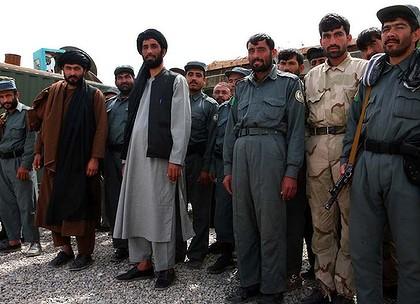
Here are photographs of Taliban with kamees up to knee ;


Comment
-
Originally posted by Samandri View Post
The Kandahar style is obviously superior. Not only does it look more formal and elegant, it makes the person look taller.[SIZE="4"][FONT="HardTimesW01-Roman"]My Blog
[url]www.salvation-from-hell.com[/url][/FONT][/SIZE]Comment
-
Wtf? Are you in your senses?Originally posted by ذو الفقار View Post
You say this to a Pashtun wearing long Khat/Kamis, he's gonna scold you!!Comment
-
What's wrong?Originally posted by salman47 View Post[SIZE="4"][FONT="HardTimesW01-Roman"]My Blog
[url]www.salvation-from-hell.com[/url][/FONT][/SIZE]Comment

Comment